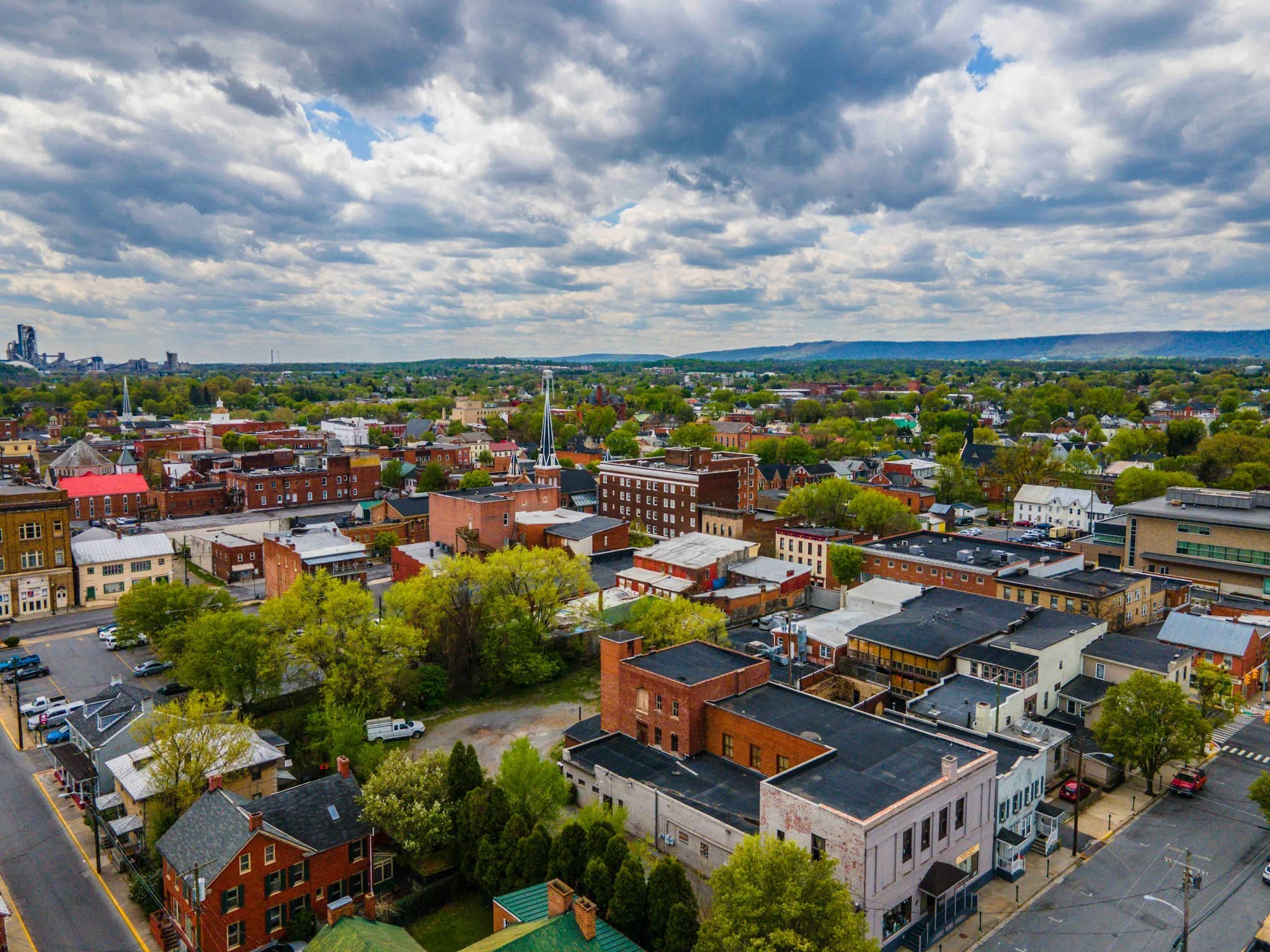
The past is prologue
I don’t care what the calendar says… Spring is the true beginning of a “new year.” The weather is adjusting to a more pleasant state. Our streets are slowly starting to see more activity from children after school, and shoppers strolling through our district. And of course, our trees, bushes, and bulbs are all teaming with vibrant blooms and buds. Life is starting anew, and so are our routines that involve getting outside.
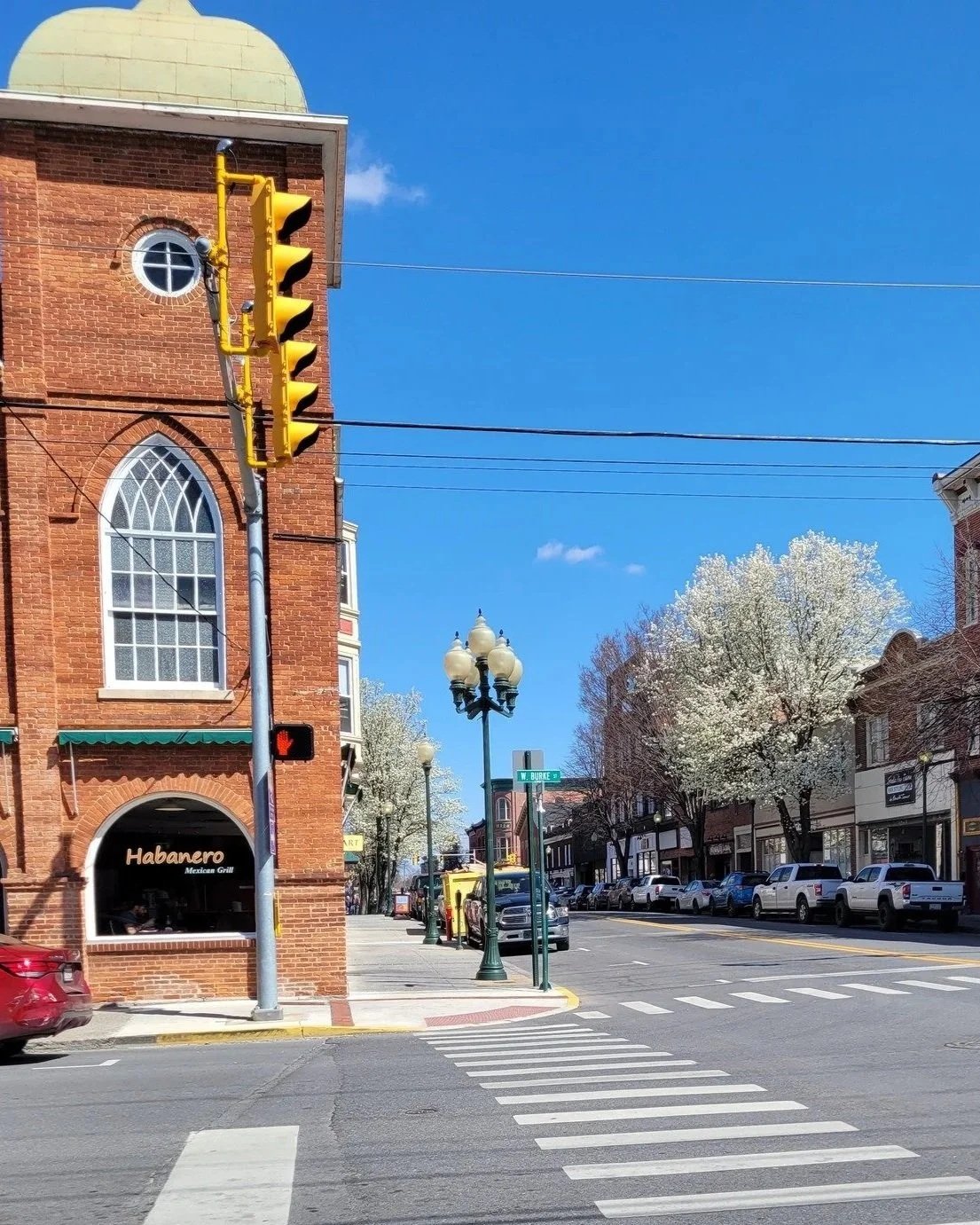
As I was walking down Queen Street amidst the peak “bloom” of the trees that line the majority of our commercial corridor I couldn’t help but laugh. For all my fellow tree-enthusiasts out there, you know what comes next. Yes, our downtown is littered with the dreaded Bradford Pear trees. According to Oklahoma State University, “The callery pear (Pryus calleryana) is a medium-sized tree that was introduced to the U.S. from Asia in the early 1900s in an attempt to fight the fire blight of the common pear. It has commonly been used as an ornamental because of its showy white flowers in early spring and beautiful fall foliage.”
You might be thinking, “Whats the problem?! I’ve never noticed them to be anything but beautiful, and the description above sounds pleasant enough!” Well the problem is best explained later on in the article which can be found here.
TL;DR: They are invasive and ecologically destructive. They’re weak and prone to snapping. And they stink… pretty bad! These trees are a nuisance and according to scientists, they are wreaking havoc on our local ecological balance. So, for those of you who didn’t know, now you know.
At the start of this Spring I found myself in a reflective mood, much like most do when we count down for the ball to drop and we turn the page to a new calendar year. While reflecting on the work we do here at Main Street, I turned to the past to review what those before us have accomplished. Thankfully, a few directors along the way did a stellar job of scrapbooking every news article, op-ed, and advertisement that featured our program (I wish I could say I have kept up the tradition.) As I was combing through the articles filled with exciting progress, accounts from skeptics of the new program, and some really thorough out-reach campaigns, I stumbled across this gem:
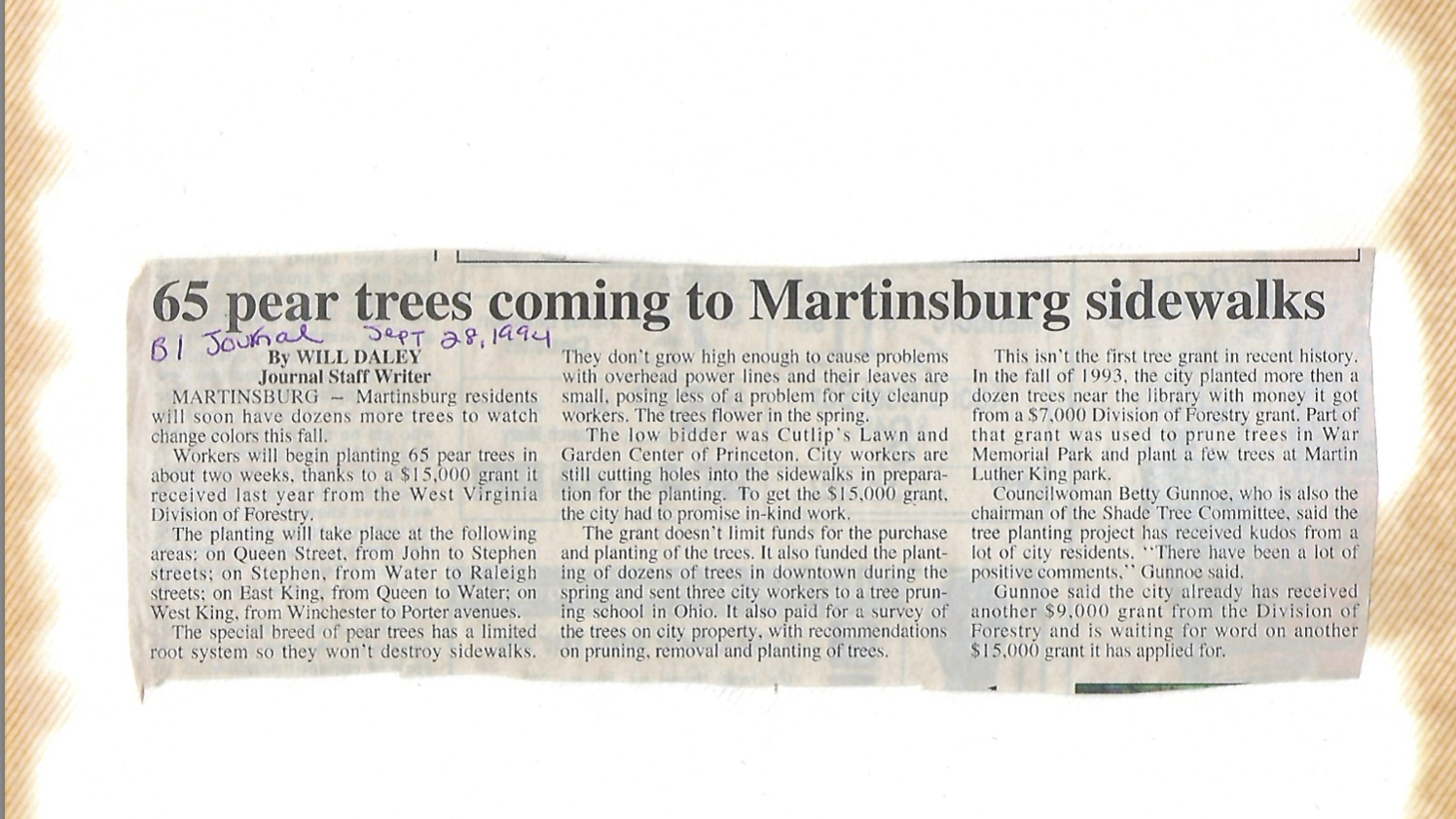
“Workers will begin planting 65 pear trees in about two weeks, thanks to a $15,000 grant it received last year from the West Virginia Division of Forestry.” This really got me thinking. These problematic trees didn’t get here by accident! This problem we now face, is one of our own doing. It’s a problem we created, quite gleefully no-less! This wasn’t a controversial company coming to town bringing loads of pollution with the tradeoff of more jobs. Heck, it wasn’t even something that the public supported but experts warned against! People in the “tree world” thought this was great! Our Shade Tree Committee, the West Virginia Forestry Department, and our city government were all excited. Now, they’re the bane of all of our existence.
The point of this story isn’t to shame the people involved with the planting of 65 pear trees in Martinsburg. In fact, I am here to celebrate them. That article from 1994 highlights a group of people from different sectors working together to do something out of the goodness of their hearts, for their community. Sure, we know better now! But that isn’t the point. When the time comes, and the trees need replaced because of blight, or splitting, or new resources become available, I hope that we as a community are ready to meet the moment like they did but this time with more knowledge and better perspectives.
This story isn’t just about trees either. It’s about resiliency and action. While they’re not ideal, those trees help cool our streets in the dog-days of the summer. Just like the rest of the built environment in our downtown, they’re a reminder of the past, and a different time. We all know the sayings… You’re either a glass half-empty or a glass half-full kind of person. I see these trees, and I am reminded of what communities are all about. Resiliency and action. Meeting the moment may require mistakes being made. But mistakes can be corrected, and deficiencies can be improved upon. The hardest thing to fix is a community that doesn’t care enough to even act. I hope that we all can reflect on the hundreds of businesses that have come, and gone… not as mistakes, or failures, or even outdated business models. Rather, I hope we can look back on them as a collection of memories and magical moments that were met by people who took action. William Shakespeare said “What's past is prologue” meaning, we get to be the author of our next chapter. Learning from our past, while adapting to what is ahead of us. Shifting economic landscapes, political divide, and an influx of new residents all are knocking on the front door. These are challenges, but they’re not new, nor will they go away without us acting. We can use our experiences for the betterment of our community, to the best of our knowledge… or we can allow others to speak on our behalf. Change is hard, but inevitable. Our buildings, streets, and residents have changed drastically over the years. They will continue to do so! We can continue to shape our community, or sit back and watch it shape into something we don’t recognize anymore. Main Streets are for everyone, and we hope that you’ll join us in celebrating our roots while building for the future!